What Size Portable Washing Machine Do You Need?
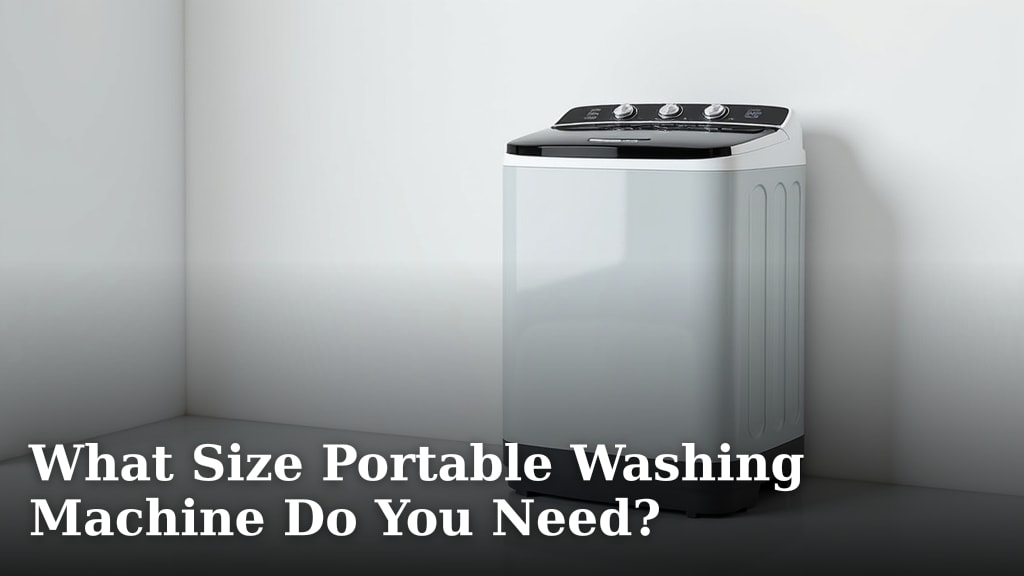
The right size portable washing machine for you depends on your household size and laundry volume. For singles or couples with light laundry needs, a compact 1-2 cubic foot model is often enough. Larger families or those who do more frequent, heavy loads might need a unit closer to 2.5-3 cubic feet.
Choosing the correct capacity means avoiding overcrowding, which can lead to less effective cleaning and potential damage to your machine. It also ensures you’re not running excessively small loads in a larger tub. We found that understanding your typical wash day helps match you with the perfect portable washer size.
- Capacity is key for clean clothes.
- Consider your household size.
- Think about how much laundry you do weekly.
- Smaller units work for 1-2 people.
- Larger units handle family-sized loads better.
Let’s break down how to figure out the best portable washing machine size for your specific needs.
So, you’re thinking about a portable washing machine. That’s a smart move, especially if you’re short on space or don’t have hookups for a full-sized unit. But standing in front of a wall of options, you might wonder: “Just how much laundry can this little thing handle?” It’s a fair question, and the answer really boils down to a few simple things about your life and your laundry habits.
Choosing the Right Capacity for Your Portable Washer
The capacity of a portable washing machine is measured in cubic feet. This number tells you how much space is inside the drum for your clothes and water. Think of it like packing a suitcase; you need enough room, but not so much that things get jumbled and don’t get clean.
We found that many shoppers get stuck between models. They worry about getting a unit that’s too small and having to do multiple tiny loads. Or they worry about buying one that’s too big and wasting water and energy. The key is to find that sweet spot that fits your laundry routine without causing extra work.
Understanding Washing Machine Capacity and Load Sizes
Portable washing machines come in various sizes, typically ranging from around 1 cubic foot for the smallest, most compact models to over 3 cubic feet for the larger ones. It’s not just about fitting clothes in; it’s about letting them move freely in the water to get truly clean.
When you overload a washer, clothes can’t tumble properly. This means detergent doesn’t distribute well, and dirt doesn’t get rinsed away. You might end up with clothes that are still stained or smell a bit off. Many manufacturers suggest you fill the drum about 75% full for optimal cleaning. This is a good rule of thumb to keep in mind.
What Does “Cubic Foot” Actually Mean for Laundry?
A cubic foot is simply a unit of volume. For washing machines, it refers to the internal volume of the drum. So, a 2-cubic-foot washer has twice the internal space of a 1-cubic-foot washer.
To give you a better idea, research suggests that a 1.0-1.5 cubic foot portable washer is generally suitable for one to two people. This size can typically handle about 6-10 pounds of dry laundry per load. Think of it as being able to wash a few days’ worth of clothes, plus maybe a towel or two.
Larger Capacity Needs for Bigger Households
If you have a larger family or tend to do bulkier items like bedding, you’ll want to look at units in the 2.0-3.0 cubic foot range. These can handle roughly 12-20 pounds of laundry per load. This is closer to what a standard, full-sized washing machine can manage.
For example, a 2.5-cubic-foot model might be able to wash a full set of queen-sized sheets and pillowcases in one go. We found that families often appreciate this larger capacity because it means fewer wash cycles throughout the week, saving time and effort.
How Household Size Impacts Your Choice
Your household size is probably the most significant factor in determining the right portable washer capacity. Let’s break it down to make it easier to visualize.
For Singles and Couples (1-2 People)
If it’s just you, or you and a partner, and your laundry habits are fairly light, a compact portable washer (around 1.0-1.5 cubic feet) is usually a great fit. You can likely do your weekly laundry in just a couple of loads. This size is also ideal for smaller living spaces, like dorm rooms, RVs, or small apartments, where space is at a premium.
Think about a typical week: a few shirts, a pair of pants, underwear, socks, and maybe a towel or two. A smaller machine can handle that easily without feeling too full. We found that many users in this category are perfectly satisfied with the performance and convenience of these smaller units.
For Small Families (3-4 People)
If you have a growing family or share your living space with a couple of roommates, you’ll probably want to step up in size. A medium-capacity portable washer, typically in the 1.6-2.0 cubic foot range, is often a good choice. This size can handle a bit more laundry per cycle.
You might be able to wash a couple of pairs of jeans, several t-shirts, and some smaller items all at once. It means you’re not constantly running the machine. Many experts suggest that this mid-range capacity balances efficiency with the ability to handle family-sized needs effectively.
For Larger Families or High Laundry Volume (5+ People)
Families of five or more, or even smaller households that generate a lot of laundry (perhaps due to sports, work uniforms, or a preference for washing bedding frequently), should aim for the larger portable washer models. Look for units with capacities of 2.1 cubic feet and up. These are designed to tackle bigger loads.
With a larger capacity, you can fit more items, potentially reducing the number of wash cycles needed per week. This is where you can really start thinking about washing a load of towels, or even a set of king-sized sheets, along with other smaller items. We found that users with larger capacities often report significant time savings compared to managing with smaller machines.
Considering Your Laundry Habits: Beyond Just the Number of People
While household size is a primary guide, your personal laundry habits can significantly influence the best capacity for you. Do you wash everything together, or do you separate colors, delicates, and heavy items?
Delicates and Special Items
If you frequently wash delicate items that require a gentler cycle, or if you have specialty items like fine linens or woolens, you might prefer to wash these separately. Even if you have a larger household, you might find that a slightly smaller machine is sufficient if you’re committed to doing these specialized washes in smaller, dedicated loads.
Frequency of Washing
How often do you typically do laundry? If you prefer to do a little bit every day or every other day, a smaller machine might work fine for you. However, if you like to get all your laundry done in one or two big sessions each week, you’ll definitely want to lean towards a larger capacity model to avoid overwhelming the machine.
Bulky Items and Linens
Do you wash your own bedding? What about large towels, blankets, or even bulky sweaters? These items take up a lot of space and can quickly fill up a smaller washer. If washing these kinds of items is part of your routine, a larger capacity portable washing machine is almost essential. You don’t want to struggle to fit a duvet cover or a thick bath towel into the drum.
A Quick Guide to Portable Washer Capacity
To help you quickly decide, here’s a simple breakdown. Think of these as general guidelines:
- 1.0 – 1.5 cu. ft.: Ideal for 1-2 people, light laundry, small apartments, RVs. Can handle about 6-10 lbs per load.
- 1.6 – 2.0 cu. ft.: Good for 3-4 people, average laundry needs, small families. Handles about 10-15 lbs per load.
- 2.1 – 3.0+ cu. ft.: Best for 5+ people, large families, heavy laundry, bulky items. Can handle 15-20+ lbs per load.
What Happens If You Choose the Wrong Size?
Picking a portable washing machine that’s too small for your needs can lead to frustration. You’ll find yourself doing multiple small loads when you could have done one larger one. This means more time spent washing, rinsing, and spinning, and more water and energy used overall.
On the flip side, a washer that’s too large might seem like a good idea, but it can also cause issues. Running a very small load in a large drum often means using more water than necessary. Some machines also struggle to agitate effectively if the load is too light and too small relative to the drum size. This could lead to less effective cleaning and potentially uneven wear on your clothes, according to some appliance experts.
The Takeaway: Match Your Machine to Your Life
Ultimately, finding the right size portable washing machine is about understanding your own laundry habits and the demands of your household. Don’t just pick the biggest or smallest option you see. Take a moment to think about how much laundry you realistically generate in a week.
Consider the types of items you wash most often. Are you washing delicate sweaters, or heavy-duty work jeans? Do you have a partner who works outdoors, or are you primarily dealing with everyday clothing? By answering these questions, you can confidently select a portable washer that will make your life easier, not harder.
Here’s a quick checklist to help you pinpoint your needs:
- How many people live in your household?
- How often do you currently do laundry?
- Do you wash bulky items like bedding or towels regularly?
- Do you have children whose clothes might require more frequent washing?
- How much space do you have available for the portable washer?
Conclusion
Choosing the right size portable washing machine is all about matching it to your life. You’ve learned that household size and your laundry habits are the biggest factors. Don’t aim for a unit that’s too small and forces multiple loads. Likewise, avoid a machine that’s too large, wasting water and energy on tiny loads. By considering your typical wash day and the items you clean most often, you can confidently pick a portable washer that simplifies your routine. Take a moment to review your laundry basket, and you’ll be ready to find the perfect fit for your space and your needs.
Frequently Asked Questions
How do I know if a portable washer is too small for me?
If you find yourself having to wash just a few items at a time, or if clothes come out still dirty or tangled, your portable washer is likely too small. You should be able to fit a few days’ worth of clothes, plus a towel or two, without cramming them in. Research suggests that consistently needing to do more than two small loads per week indicates you might need a larger capacity.
Can a portable washer be too big?
Yes, a portable washer can be too big if you consistently run very small loads. Using more water and energy than necessary is inefficient. Some machines also struggle to agitate clothes properly if the drum isn’t at least partially filled, which could impact cleaning effectiveness.
What’s the difference between pounds and cubic feet for washer capacity?
Cubic feet measures the internal volume of the washing machine drum, indicating how much space is available. Pounds refer to the typical weight of dry laundry that a machine can effectively wash. While these measures are related, cubic feet is the direct measurement of the machine’s size, and pounds give you a practical idea of load capacity.
Does my washing frequency affect the size I need?
It certainly does. If you prefer to do a small load every day or two, a smaller portable washer might suffice. However, if you prefer to consolidate all your laundry into one or two larger sessions per week, you will need a larger capacity machine to handle the volume without overfilling.
How much laundry can a 1.5 cubic foot portable washer handle?
A portable washer with a 1.5 cubic foot capacity is generally suitable for 1-2 people. It can typically handle about 6-10 pounds of dry laundry per load. This is usually enough for a few days’ worth of clothing for one or two individuals, plus a couple of smaller items like towels.